
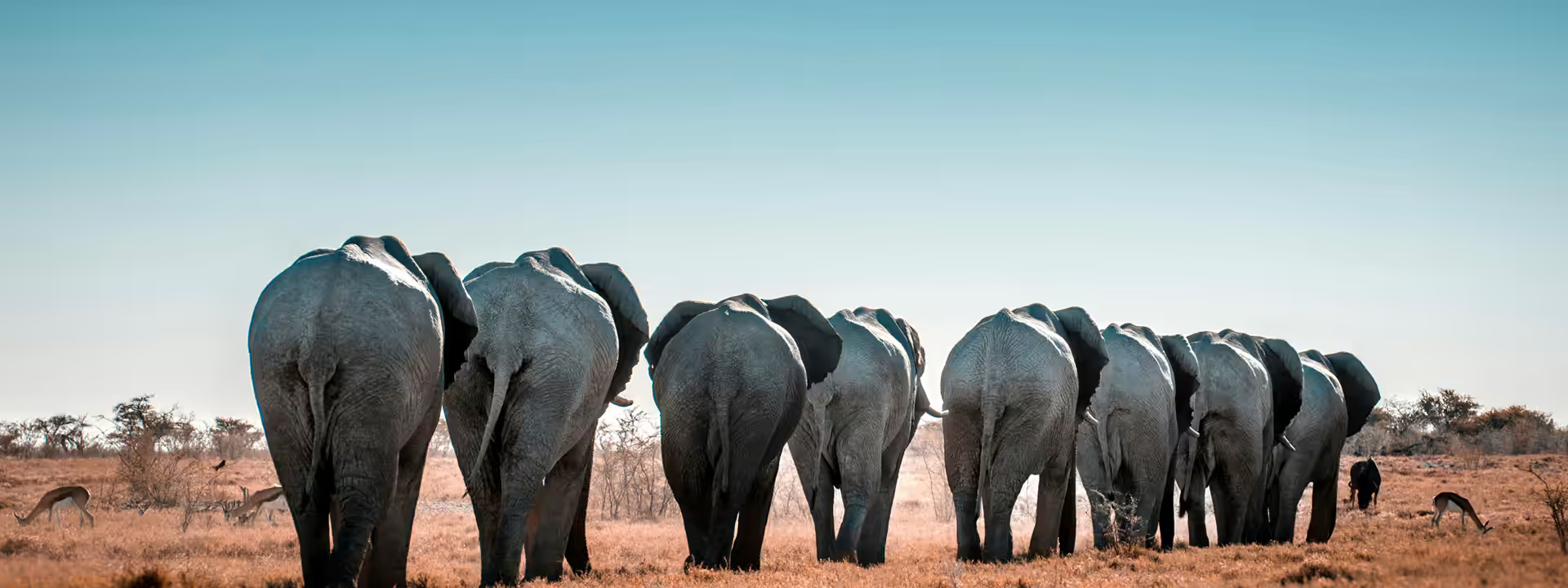
Crucial Markers
Explore the iconic landscape dominated by ancient baobab trees.
Essential encounter documented within the territorial boundaries of Tarangire National Park.
Experience exceptional game viewing during the dry season (July-October) around the Tarangire River.
Essential encounter documented within the territorial boundaries of Tarangire National Park.
Discover a high concentration of predators including lions, leopards, and cheetahs.
Essential encounter documented within the territorial boundaries of Tarangire National Park.
Enjoy diverse birdlife with over 550 species recorded.
Essential encounter documented within the territorial boundaries of Tarangire National Park.
Participate in unique walking safaris and thrilling night drives (in designated areas/camps).
Essential encounter documented within the territorial boundaries of Tarangire National Park.
Seasonal Intel
Prime Visibility
Based on field reports, Jan, Feb, Mar, Apr, Aug, Dec, Nov, Jul, Jun, Oct, Sep, May offer peak wilderness encounters.
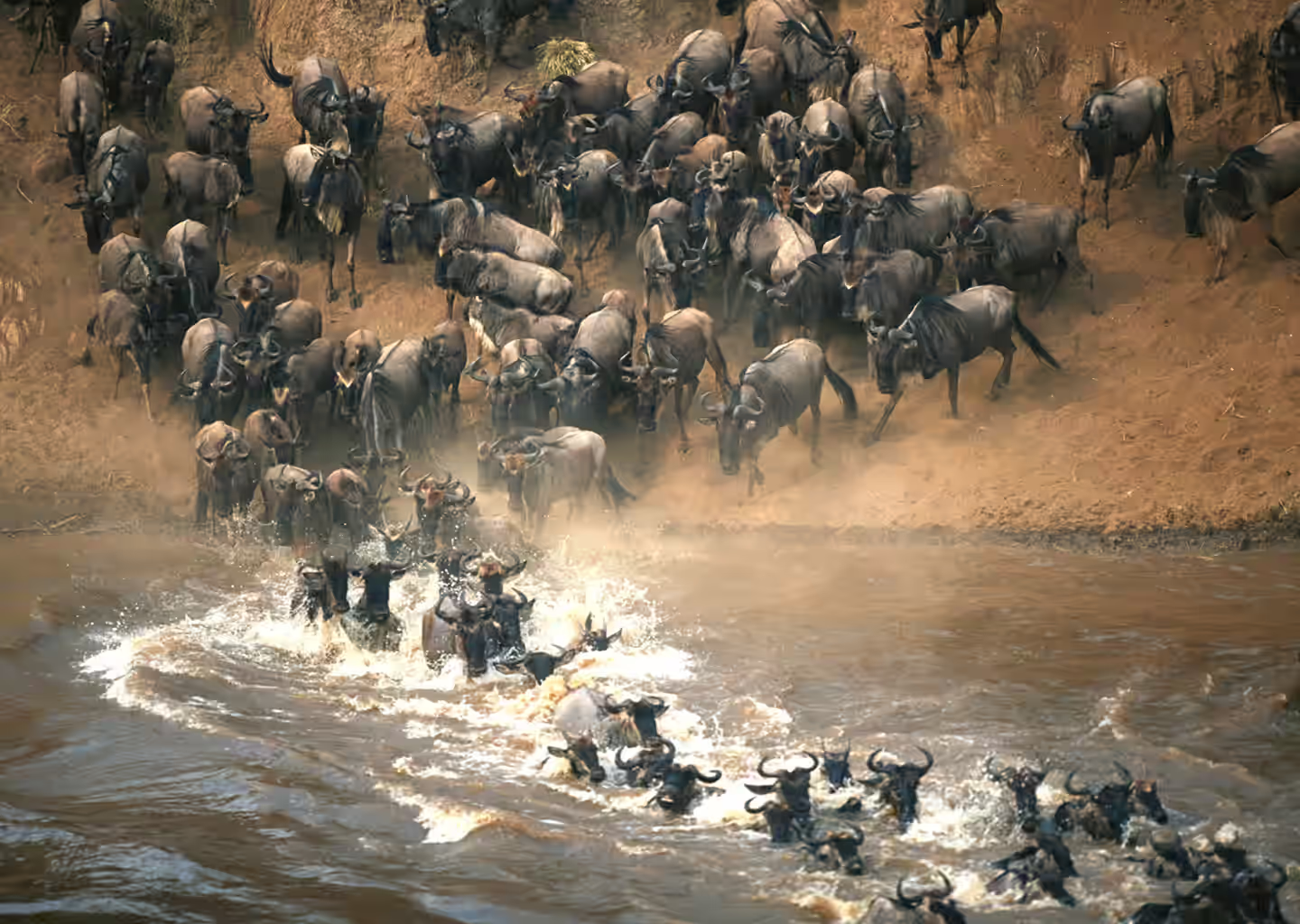
Migration Cycle
Consult with our wardens for precise dates regarding movement of the great herds.
Territorial Center
Sector Tanzania
Wildlife Registry
Active inhabitants confirmed on site
Territory
Briefing
Tours through this Domain
Travel
Protocol
Everything you need to secure before deployment. We handle the complexity, you handle the discovery.
Park Entry Fees
•
Payable via TANAPA
electronic system — fees typically included in operator package.
Access
• Road: approx. 2 hours from Arusha.
- Airstrip: Kuro Airstrip inside the park.
Walking Safaris
•
Guided walking safaris
available from select camps. Armed ranger escort required. Minimum 2 persons.
Book through your camp or operator in advance.
Accommodation
Park Rules & Regulations:
Driving Hours
•
Game drives permitted
between 06:00 and 18:00 only. No driving in the park after dark except to/from
designated campsites.
Speed Limit
•
50 km/h on main tracks,
25 km/h near wildlife. Strictly enforced.
No Off-Road
•
Off-road driving
prohibited without special TANAPA permit. Vegetation and soil are sensitive —
remain on designated tracks.
No Littering or Feeding
•
Strictly prohibited
throughout. Baboons at picnic sites are particularly bold — store all food
securely in vehicle.
Stay in Vehicle
•
Exit vehicle only at
designated picnic sites. Walking safaris require an armed TANAPA ranger at all
times.
Tsetse Fly Awareness
•
Avoid wearing dark blue
or black clothing — these colours strongly attract tsetse flies. Neutral safari
colours are mandatory for comfort.
What to Pack:
Clothing
•
Neutral safari wear.
Long sleeves and trousers for tsetse fly protection. Light fleece for cooler
mornings.
–
Absolutely
avoid dark blue, black, or purple clothing — tsetse flies are attracted to
these colours.
Sun & Insect Protection
•
Sunscreen SPF 50+,
wide-brim hat, insect repellent DEET 30–50%, tsetse-proof loose-weave shirt.
–
Tsetse
protection is the top priority at Tarangire — insect repellent AND neutral
clothing.
Health & Medical
•
Anti-malarial
medication, first-aid kit, rehydration salts, antihistamine for insect bites.
–
Tsetse
bites can be painful — antihistamine cream helpful.
Camera & Optics
•
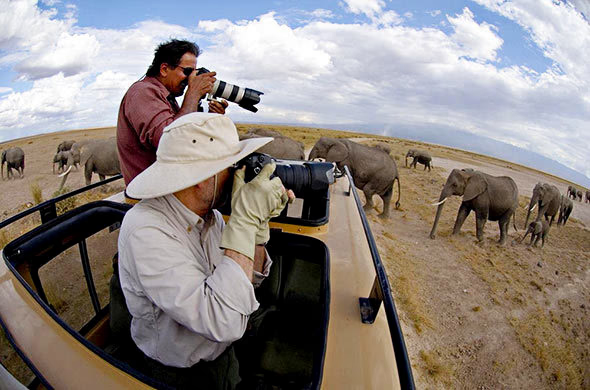
300mm+ zoom lens
(elephant herds), binoculars, extra memory cards.
–
Elephant
and bird photography is exceptional — bring a monopod for stability.
Walking Safari Gear
•
Sturdy closed-toe shoes
with ankle support, light walking trousers, sun hat.
–
Walking
safaris available — comfortable footwear is essential.
Luggage & Documents
•
Soft bag (15 kg max for
bush flights), passport, visa, Yellow Fever cert., insurance, park
confirmation.
–
Kuro
airstrip handles small aircraft only — weight limits strictly enforced.
Mandatory Travel Requirements & Fees:
MANDATORY — VISA
•
All visitors must
hold a valid tourist visa before or upon arrival into Tanzania.
Tourist Visa Cost
•
Most nationalities: USD
50 (single entry). US citizens: USD 100. East Africa Tourist Visa (Tanzania +
Kenya + Uganda): USD 100. Apply online at immigration.go.tz or obtain on
arrival at Kilimanjaro International Airport (JRO) or Julius Nyerere International
Airport (DAR).
Passport Validity
•
Passport must be valid
for at least six months beyond your intended date of entry into Tanzania and
contain at least one completely blank page for entry and exit stamps.
MANDATORY — VI-TAX (PFF)
•
Passenger
Facilitation Fee — mandatory for all non-EAC/SADC international travellers
effective 1 November 2025.
VI-Tax Amount
•
One-way international
journey: USD 45 per person. Return international journey: USD 90 per person.
Applicable to all non-EAC and non-SADC nationals travelling on international
flights to/from Tanzania. This fee is in addition to your airline ticket and is
typically collected at check-in or through your tour operator.
MANDATORY — YELLOW FEVER
•
Yellow Fever
vaccination certificate requirements for entry into Tanzania.
Yellow Fever Certificate
•
A valid Yellow Fever
vaccination certificate (Carte Jaune) is MANDATORY only if you are arriving
directly from, or transiting through, a country with risk of Yellow Fever
transmission (including most sub-Saharan African and South American countries).
Travellers arriving without a required certificate may be vaccinated at the
port of entry (fee applies) or refused entry. Consult your travel health clinic
at least 10 days before departure.
MANDATORY — TRAVEL INSURANCE
•
Comprehensive travel
insurance is mandatory for all Tanzania safari and tourism packages.
Insurance Coverage
•
Policy must include:
emergency medical treatment and hospitalisation, emergency medical evacuation
and repatriation, trip cancellation and curtailment, personal liability, loss
of baggage and personal effects, and 24-hour emergency assistance. For remote
parks, AMREF Flying Doctors cover (approx. USD 25 per person per trip) is
strongly recommended.
Mandatory Insurance — Tanzania
& Zanzibar
•
Adults: USD 44 per
person. Children (3–17 years): USD 22 per person. This is in addition to your
standard comprehensive travel insurance.
Frequently Asked Questions
Essential intelligence for your deployment. Verified and updated by our lead wardens for Tarangire National Park.
Tarangire is unique for its immense elephant population, iconic baobab trees, and the significant concentration of wildlife around the Tarangire River during the dry season. It offers a more secluded and authentic safari experience compared to other parks on the northern circuit.
The optimal time for wildlife viewing is during the dry season, from July to October. Animals gather around the Tarangire River, making sightings easier and more frequent, especially for large herds of elephants.
Yes, walking safaris are offered in designated areas of Tarangire National Park, often arranged through specific lodges or tour operators. They provide a unique perspective on the smaller flora and fauna and an intimate connection with the bush.
Tarangire offers a range of accommodations, from luxurious tented camps that blend seamlessly into the environment to comfortable lodges, many providing stunning views and excellent service tailored for discerning travelers.
Absolutely. Tarangire provides an excellent introduction to an African safari with its abundant wildlife, iconic landscapes, and diverse activities. Its less crowded nature can also enhance the experience for first-timers.
CHART YOUR
OWN PATH
Ready to descend into the heart of Tarangire National Park? Our wardens are standing by to draft your unique expedition papers.