
Crucial Markers
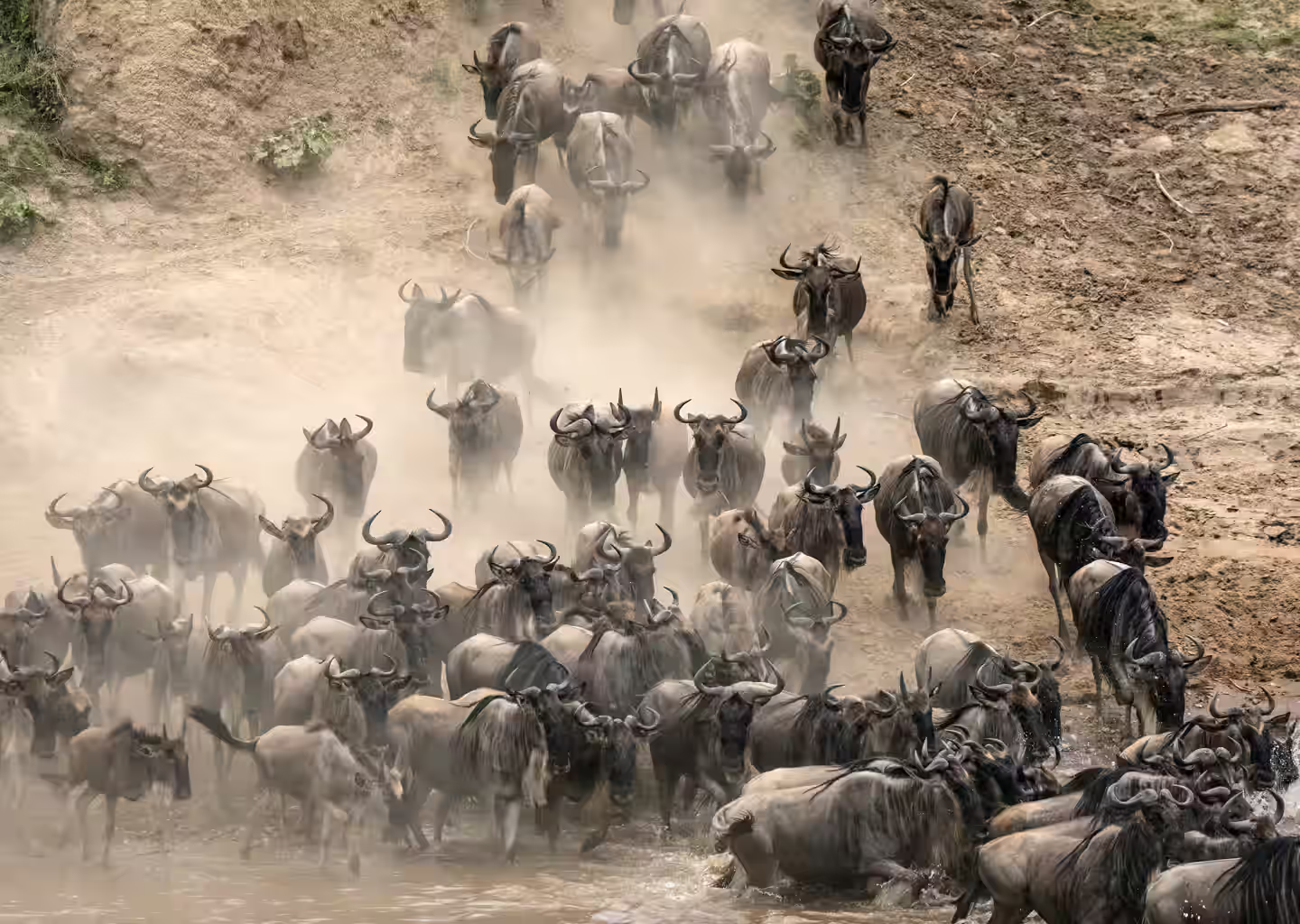
• Great Wildebeest Migration — the greatest wildlife show on earth, year-round across the ecosystem
Essential encounter documented within the territorial boundaries of Serengeti National Park.
• World's highest density of lions — large prides throughout the central plains and kopjes
Essential encounter documented within the territorial boundaries of Serengeti National Park.
• Dramatic river crossings — Grumeti River (Jun–Jul) and Mara River (Aug–Oct)
Essential encounter documented within the territorial boundaries of Serengeti National Park.
• Ndutu calving season (Jan–Feb) — thousands of wildebeest calves born daily with intense predator action
Essential encounter documented within the territorial boundaries of Serengeti National Park.
• Leopards of Seronera — one of Africa's best locations for leopard sightings
Essential encounter documented within the territorial boundaries of Serengeti National Park.
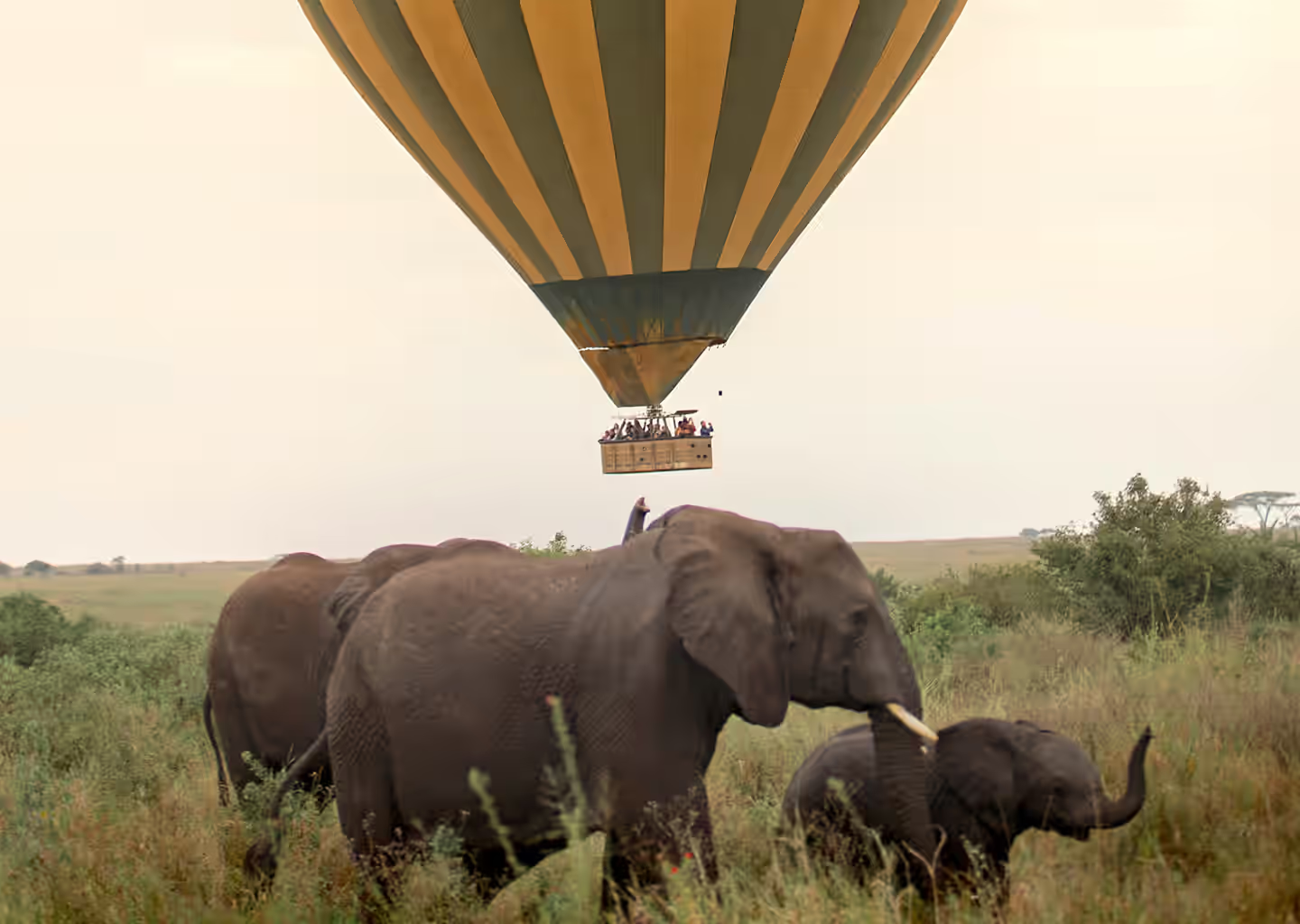
• Balloon safaris over the plains at dawn — a once-in-a-lifetime perspective
Essential encounter documented within the territorial boundaries of Serengeti National Park.
• Kopjes (rock outcroppings) — favoured resting sites for lions, cheetahs, and klipspringers
Essential encounter documented within the territorial boundaries of Serengeti National Park.
• Over 500 bird species including secretary birds, kori bustards, and raptors
Essential encounter documented within the territorial boundaries of Serengeti National Park.
Seasonal Intel
Prime Visibility
Based on field reports, Jun, Jul, Aug, Sep, Oct, Jan, Feb, Mar, Apr, May, Nov, Dec offer peak wilderness encounters.
Migration Cycle
Consult with our wardens for precise dates regarding movement of the great herds.
Territorial Center
Sector Tanzania
Wildlife Registry
Active inhabitants confirmed on site
Territory
Briefing
Tours through this Domain
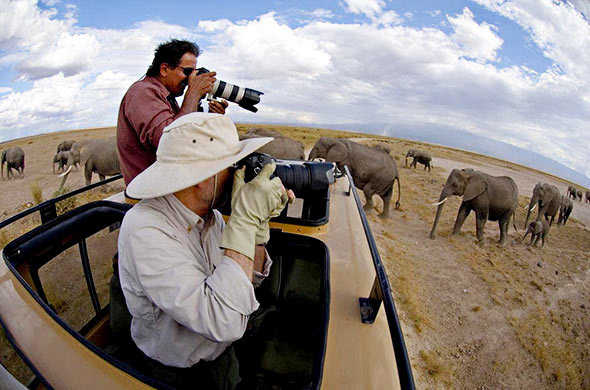
7-Day Northern Tanzania Wildlife Safari Adventure
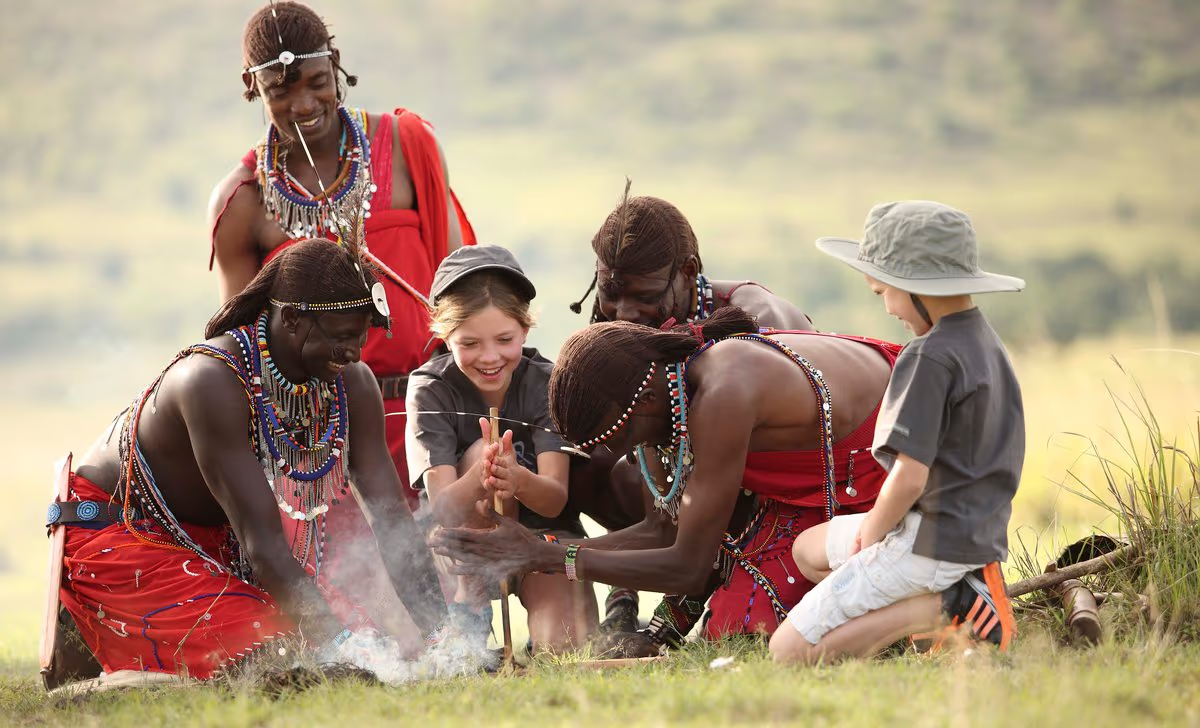
4-Day Tanzania Northern Circuit Safari: Lake Manyara, Serengeti & Ngorongoro
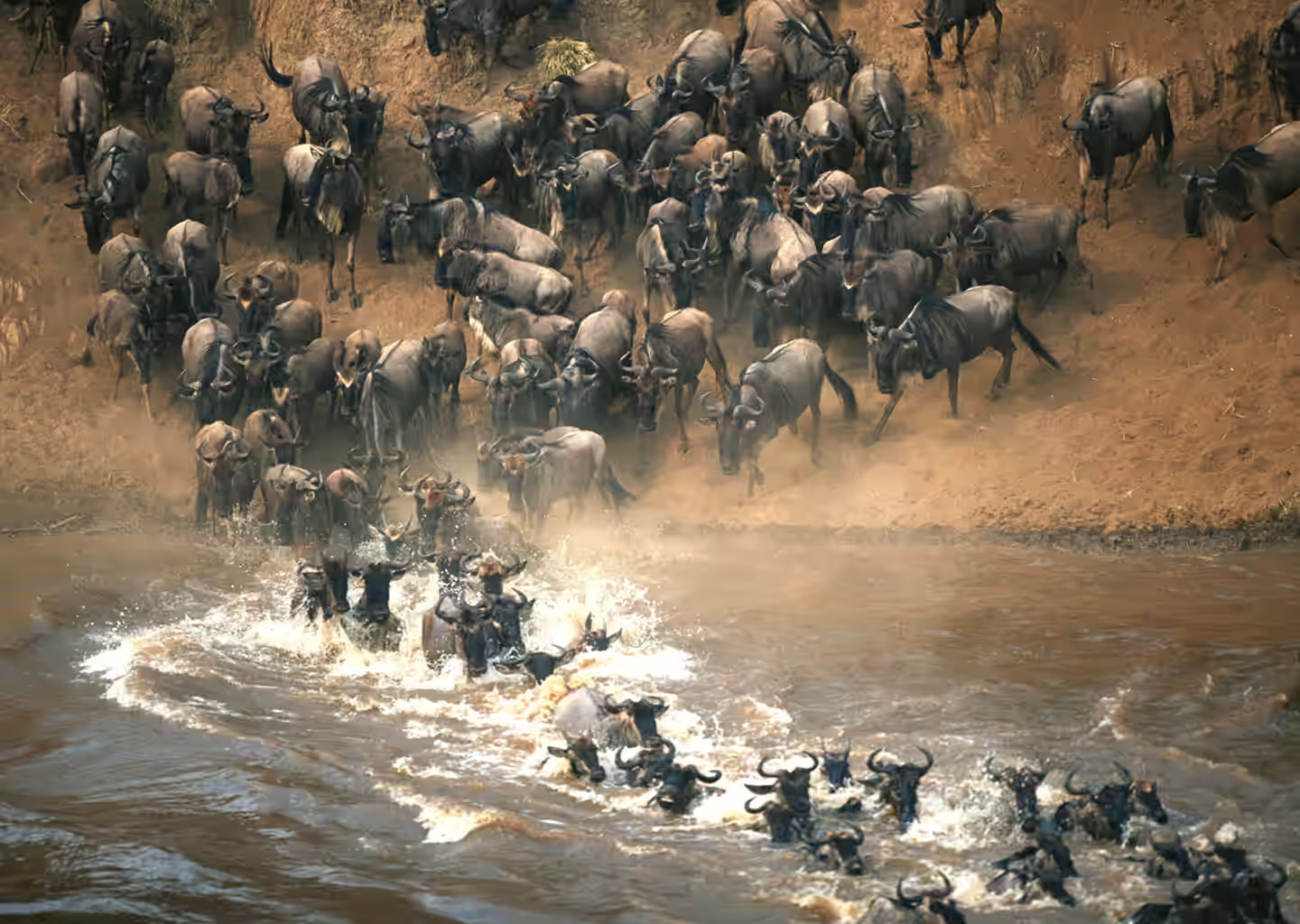
Serengeti Great Migration Safari
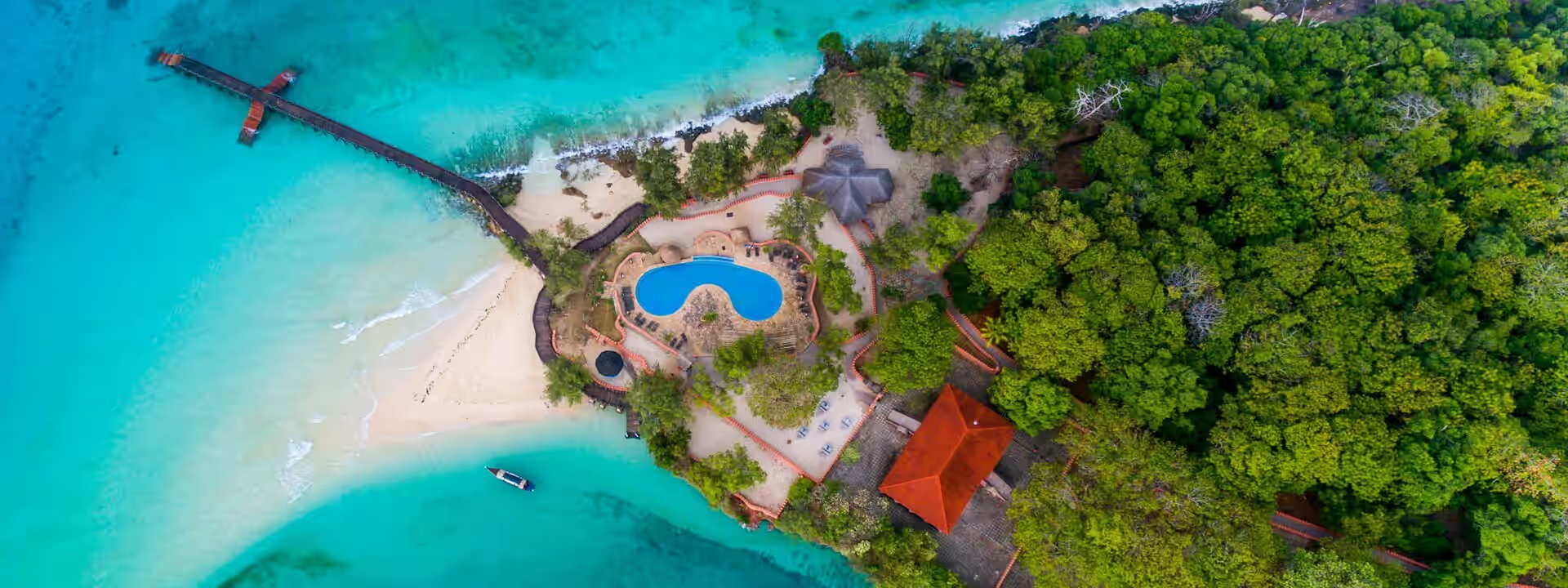
Zanzibar Beach & Spice Tour
Activities Found in this Location
Aggregated adventures from walking safaris to high-altitude balloon escapes. Curated for the fearless explorer.
Accommodation found
in this location
Travel
Protocol
Everything you need to secure before deployment. We handle the complexity, you handle the discovery.
•
Daily fees are typically
included in your tour operator package.
Entry Gates
•
Main gates: Naabi Hill
(south), Kleins Gate (northeast), Bolonganja (northwest). Most visitors enter
via Naabi Hill from Ngorongoro.
Access
• Fly-in via Seronera, Grumeti, Kogatende, Lobo, or Ndutu airstrips from Arusha (approx. 1 hour).
- Drive: 8–9 hours from Arusha via Ngorongoro.
Accommodation
•
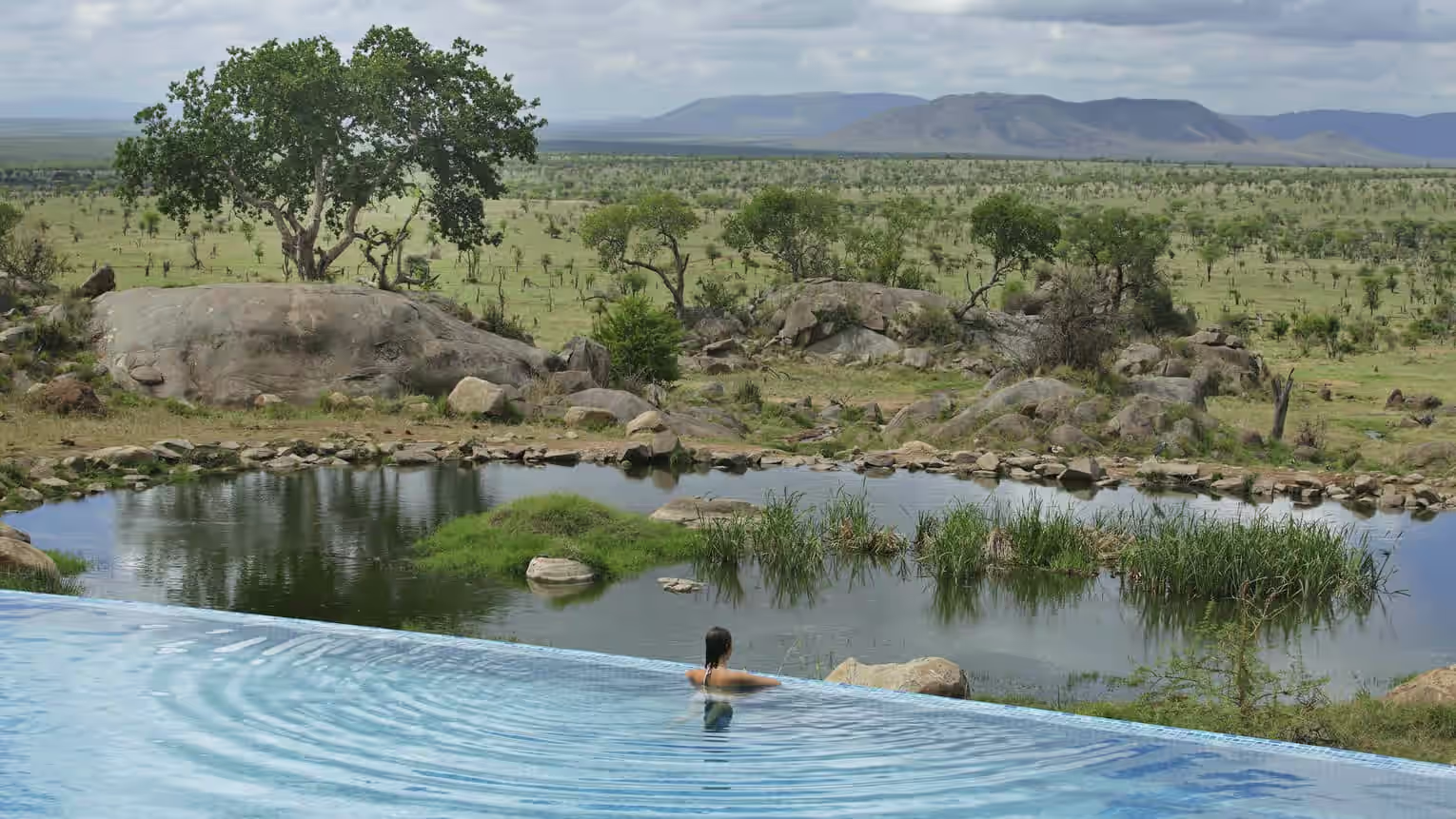
Luxury tented camps
(Singita, Four Seasons, &Beyond), mid-range lodges, and public/special
campsites. Mobile camps follow the migration seasonally.
Currency in Park
•
USD widely accepted at
lodges and camps. TZS for local purchases. USD notes must be printed 2006 or
later. No ATMs inside the park.
Vehicle Requirements
Driving Hours
•
Driving is permitted
between 06:00 and 18:00 only. No game drives permitted after 18:00. Violators
face fines and permit revocation.
Speed Limits
•
Maximum speed limit
inside the park is 50 km/h on main roads and 25 km/h on game tracks. Strictly
enforced — heavy fines apply.
Off-Road Driving
•
Off-road driving is
strictly PROHIBITED unless the vehicle holds a valid special off-road permit
issued by TANAPA. Violation carries severe penalties and possible park ban.
No Littering
•
Littering anywhere
inside the park is strictly prohibited. All waste must be retained in vehicle
and disposed of at designated facilities only.
No Feeding Wildlife
•
Feeding any wildlife —
including baboons, birds, and mongoose — is strictly forbidden and may result
in immediate ejection from the park.
Noise Restrictions
•
Excessive noise (loud
music, shouting near animals) is prohibited. Approach wildlife slowly and
maintain a quiet, calm vehicle environment at all times.
Vehicle Count Limits
•
A maximum of 5 vehicles
are allowed at any one sighting simultaneously. Rangers actively enforce this —
keep moving if the limit is reached.
Stay in Vehicle
•
Passengers must remain
in their vehicle at all times except at designated picnic sites and viewpoints.
Exiting the vehicle in the presence of wildlife is a serious violation.
No Collection
•
It is illegal to
collect, remove, or disturb any plant, rock, soil, animal, or cultural artefact
within the park boundaries.
Campfire Rules
•
Campfires permitted only
at designated public campsites with prior authorisation. No open fires in the
bush or outside designated areas.
Clothing
•
Neutral safari wear
(khaki, olive, beige, grey). Long-sleeved shirts, trousers, shorts,
fleece/light jacket for early mornings and evenings.
–
Avoid
blue and black — attract tsetse flies. Serengeti mornings (Jun–Sep) can be
cold: pack a warm layer.
Footwear
•
Comfortable closed-toe
shoes or trail runners. Sandals for lodge/camp use.
–
Walking
shoes needed for picnic sites and designated walking areas.
Sun & Insect Protection
•
Sunscreen SPF 50+,
wide-brim hat, UV-protective sunglasses. DEET insect repellent (30–50%).
–
Open
vehicle sun exposure is intense — reapply sunscreen every 2–3 hours.
Health & Medical
•
Anti-malaria medication,
personal first-aid kit, rehydration sachets, hand sanitiser, any prescription
medicines.
–
Bring
sufficient supply for the full trip. No pharmacy in the park.
Camera & Optics
•
Camera with 300–600mm
zoom lens, extra batteries, memory cards, sensor wipes. Binoculars (8x42 or
10x42).
–
Dust
covers essential. Dawn balloon safaris demand very fast lenses.
Luggage
•
Soft-sided duffel bag
(max 15 kg including hand luggage for bush flights). Hard shell suitcase stored
at Arusha hotel.
–
Strictly
enforced on small aircraft — Cessna 208 and similar.
Documents
•
Passport (6+ months
validity), printed e-Visa or on-arrival visa receipt, Yellow Fever certificate
(if required), travel insurance documents, TANAPA park booking confirmation.
–
Keep
digital copies on your phone. Physical copies also recommended.
Extras
•
Power bank, universal
adapter (Type G UK plug), torch/headlamp, reusable water bottle, lip balm.
–
Electricity
available at lodges; remote camps may have limited hours.
MANDATORY — VISA
•
All visitors must
hold a valid tourist visa before or upon arrival into Tanzania.
Tourist Visa Cost
•
Most nationalities: USD
50 (single entry). US citizens: USD 100. East Africa Tourist Visa (Tanzania +
Kenya + Uganda): USD 100. Apply online at immigration.go.tz or obtain on
arrival at Kilimanjaro International Airport (JRO) or Julius Nyerere International
Airport (DAR).
Passport Validity
•
Passport must be valid
for at least six months beyond your intended date of entry into Tanzania and
contain at least one completely blank page for entry and exit stamps.
MANDATORY — VI-TAX (PFF)
•
Passenger
Facilitation Fee — mandatory for all non-EAC/SADC international travellers
effective 1 November 2025.
VI-Tax Amount
•
One-way international
journey: USD 45 per person. Return international journey: USD 90 per person.
Applicable to all non-EAC and non-SADC nationals travelling on international
flights to/from Tanzania. This fee is in addition to your airline ticket and is
typically collected at check-in or through your tour operator.
MANDATORY — YELLOW FEVER
•
Yellow Fever
vaccination certificate requirements for entry into Tanzania.
Yellow Fever Certificate
•
A valid Yellow Fever
vaccination certificate (Carte Jaune) is MANDATORY only if you are arriving
directly from, or transiting through, a country with risk of Yellow Fever
transmission (including most sub-Saharan African and South American countries).
Travellers arriving without a required certificate may be vaccinated at the
port of entry (fee applies) or refused entry. Consult your travel health clinic
at least 10 days before departure.
MANDATORY — TRAVEL INSURANCE
•
Comprehensive travel
insurance is mandatory for all Tanzania safari and tourism packages.
Insurance Coverage
•
Policy must include:
emergency medical treatment and hospitalisation, emergency medical evacuation
and repatriation, trip cancellation and curtailment, personal liability, loss
of baggage and personal effects, and 24-hour emergency assistance. For remote
parks, AMREF Flying Doctors cover (approx. USD 25 per person per trip) is
strongly recommended.
Mandatory Insurance — Tanzania
& Zanzibar
•
Adults: USD 44 per
person. Children (3–17 years): USD 22 per person. This is in addition to your
standard comprehensive travel insurance.
Frequently Asked Questions
Essential intelligence for your deployment. Verified and updated by our lead wardens for Serengeti National Park.
No FAQ briefing available yet.
CHART YOUR
OWN PATH
Ready to descend into the heart of Serengeti National Park? Our wardens are standing by to draft your unique expedition papers.