
Crucial Markers
Tree-climbing lions
Essential encounter documented within the territorial boundaries of Lake Manyara National Park.
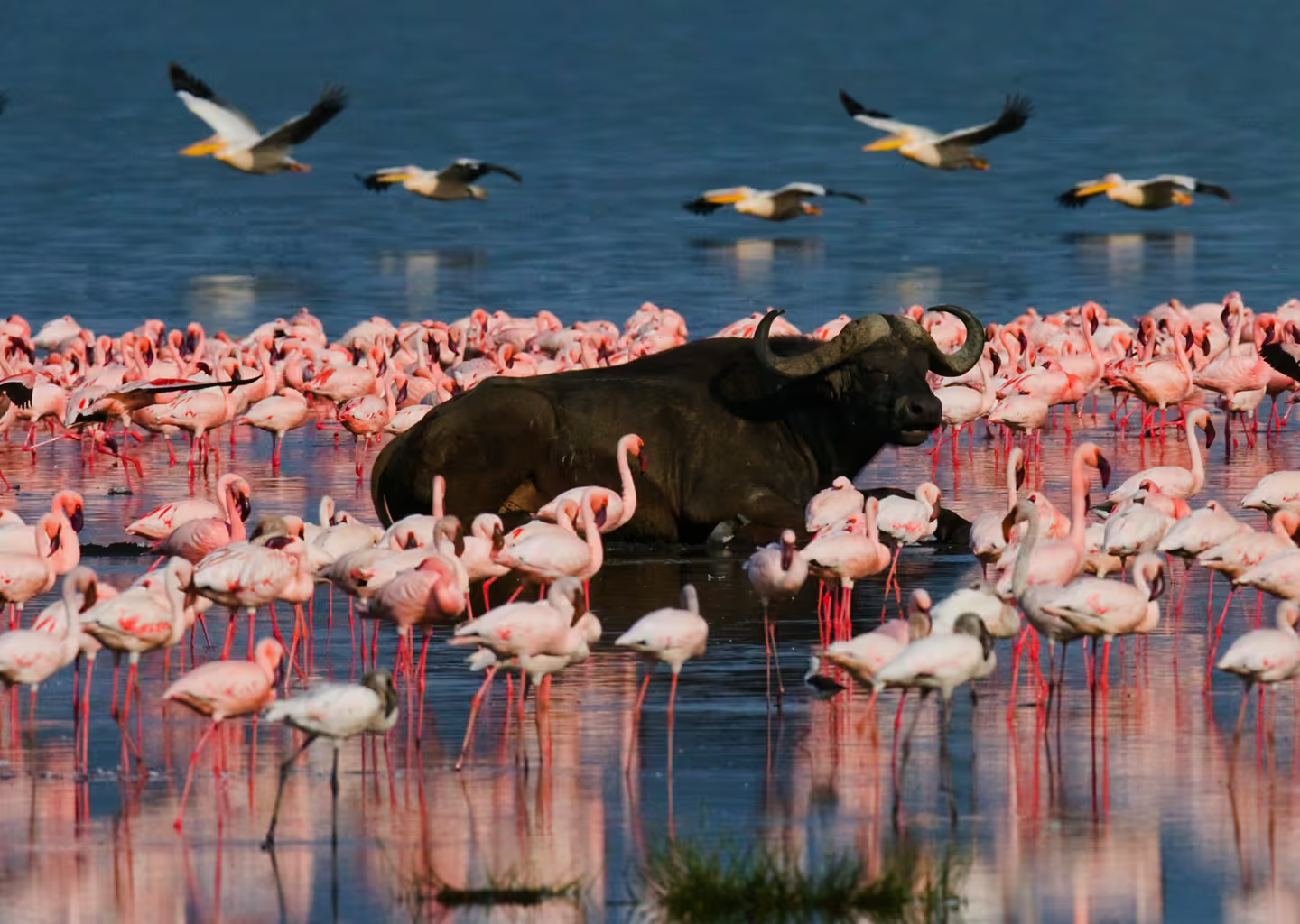
Vast flocks of flamingos on Lake Manyara
Essential encounter documented within the territorial boundaries of Lake Manyara National Park.
Dense baboon populations
Essential encounter documented within the territorial boundaries of Lake Manyara National Park.
Diverse birdlife (over 400 species)
Essential encounter documented within the territorial boundaries of Lake Manyara National Park.
Beautiful Great Rift Valley scenery
Essential encounter documented within the territorial boundaries of Lake Manyara National Park.
Game drives showcasing elephants, giraffes, and hippos
Essential encounter documented within the territorial boundaries of Lake Manyara National Park.
• Short drive from Arusha — ideal first or last park on the Northern Circuit
Essential encounter documented within the territorial boundaries of Lake Manyara National Park.
Seasonal Intel
Prime Visibility
Based on field reports, Aug, Jul, Oct, Jun, May, Sep, Jan, Feb, Nov offer peak wilderness encounters.
Migration Cycle
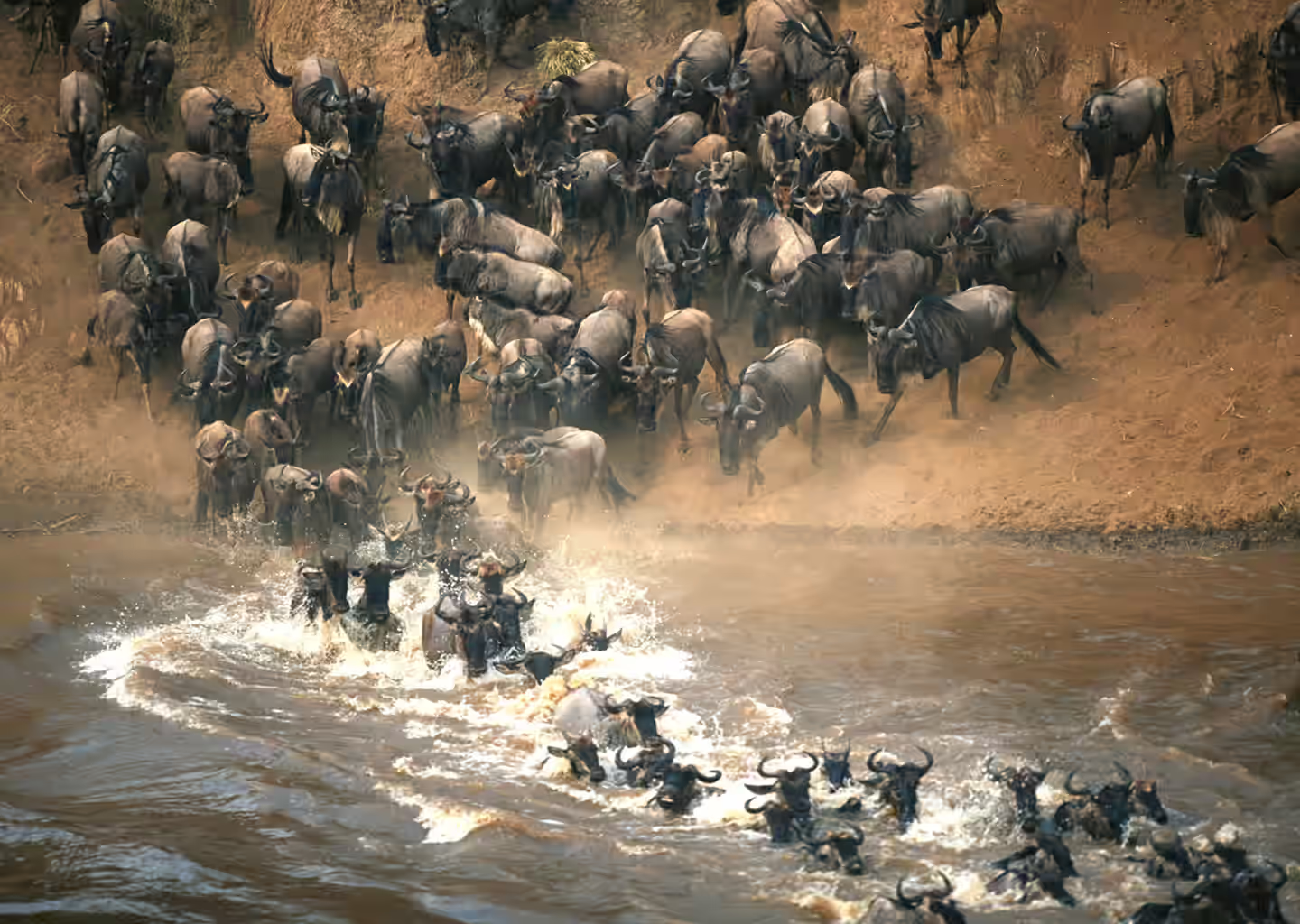
Consult with our wardens for precise dates regarding movement of the great herds.
Territorial Center
Sector Tanzania
Wildlife Registry
Active inhabitants confirmed on site
Territory
Briefing
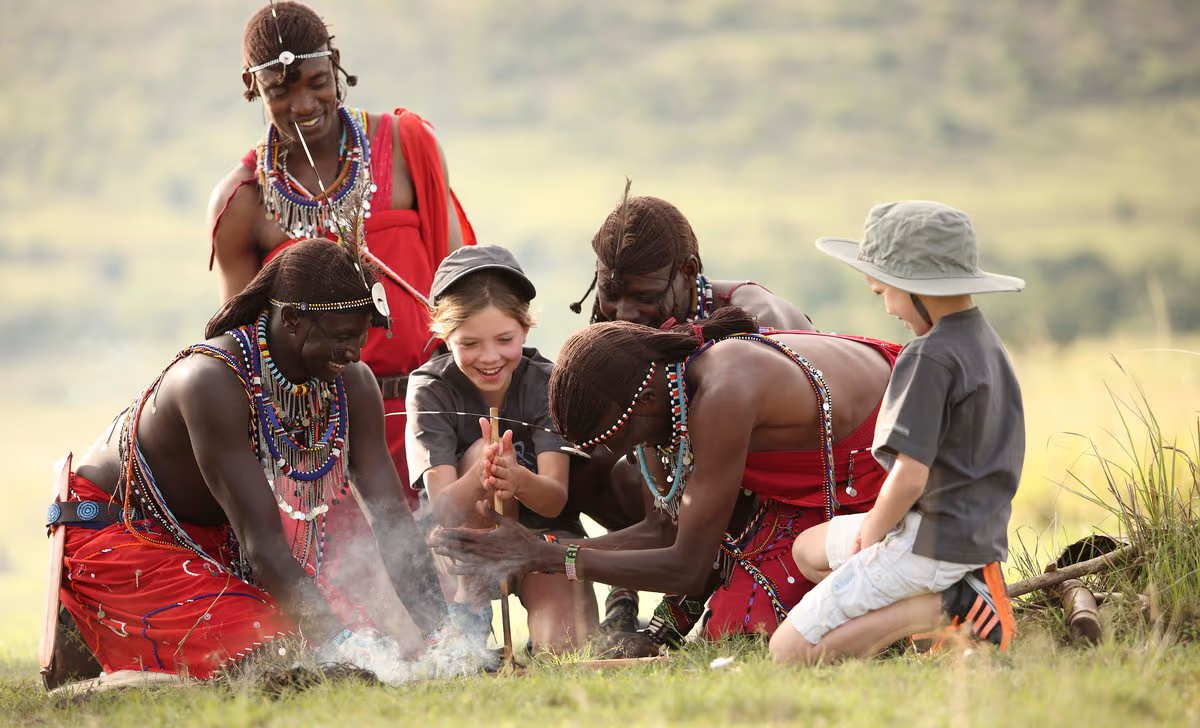
Activities Found in this Location
Aggregated adventures from walking safaris to high-altitude balloon escapes. Curated for the fearless explorer.
Travel
Protocol
Everything you need to secure before deployment. We handle the complexity, you handle the discovery.
Park Entry Fees
•
Fees via TANAPA
electronic system — usually included in operator package.
Access
• Road: approx. 2 hours from Arusha.
- Flights: Lake Manyara Airstrip is served by regional flights from Arusha (25 min).
Park Layout
•
Narrow and linear —
approx. 50 km long, 16 km wide. Most game viewing is concentrated in the forest
zone and along the lake edge. Half-day to full day is sufficient.
Accommodation
• Several rim lodges above the park (Lake Manyara Serena, and Beyond Lake Manyara Tree Lodge, Lake Manyara Kilima moja Lodge), with dramatic escarpment views.
Park Rules & Regulations:
Driving Hours
•
06:00–18:00 only. Park
is compact — plan your circuit to return to gate comfortably before closing.
Speed Limit
•
50 km/h on main road, 25
km/h on forest tracks. Particularly important in the forest zone, where animals
cross suddenly.
No Off-Road
•
Off-road driving is strictly prohibited. The forest floor is extremely sensitive to vehicle damage.
No Littering or Feeding
•
Baboon troops along the
forest road are habituated and bold. Keep vehicle windows closed and do not
offer food under any circumstances.
Stay in Vehicle
•
Remain in the vehicle at all
times except at the designated hippo pool picnic area.
What to Pack:
Clothing
•
Neutral safari wear,
light long-sleeved shirt for forest birding, rain jacket.
– The forest zone can be humid and produce sudden showers even in the dry season.
Insect & Sun Protection
•
Insect repellent DEET
30–50%, sunscreen SPF 50+, hat.
–
Tsetse
flies present in forest sections — neutral clothing essential.
Binoculars & Camera
•
Binoculars essential for
flamingo viewing on the lake. 300mm+ lens for birds and tree-climbing lions.
–
Morning
forest light is exceptional for photography — arrive at the gate at opening.
Health & Medical
•
Anti-malarial
medication, first-aid kit, rehydration sachets.
–
Short
park visit — ensure medications are taken before arrival.
Documents
•
Passport, visa,
insurance, park confirmation.
–
Often
the first park visited on the Northern Circuit — ensure all documents are ready at the gate.
MANDATORY — VISA
•
All visitors must
hold a valid tourist visa before or upon arrival into Tanzania.
Tourist Visa Cost
•
Most nationalities: USD
50 (single entry). US citizens: USD 100. East Africa Tourist Visa (Tanzania +
Kenya + Uganda): USD 100. Apply online at immigration.go.tz or obtain on
arrival at Kilimanjaro International Airport (JRO) or Julius Nyerere International
Airport (DAR).
Passport Validity
•
Passport must be valid
for at least six months beyond your intended date of entry into Tanzania and
contain at least one completely blank page for entry and exit stamps.
MANDATORY — VI-TAX (PFF)
•
Passenger
Facilitation Fee — mandatory for all non-EAC/SADC international travellers
effective 1 November 2025.
VI-Tax Amount
•
One-way international
journey: USD 45 per person. Return international journey: USD 90 per person.
Applicable to all non-EAC and non-SADC nationals travelling on international
flights to/from Tanzania. This fee is in addition to your airline ticket and is
typically collected at check-in or through your tour operator.
MANDATORY — YELLOW FEVER
•
Yellow Fever
vaccination certificate requirements for entry into Tanzania.
Yellow Fever Certificate
•
A valid Yellow Fever
vaccination certificate (Carte Jaune) is MANDATORY only if you are arriving
directly from, or transiting through, a country with risk of Yellow Fever
transmission (including most sub-Saharan African and South American countries).
Travellers arriving without a required certificate may be vaccinated at the
port of entry (fee applies) or refused entry. Consult your travel health clinic
at least 10 days before departure.
MANDATORY — TRAVEL INSURANCE
•
Comprehensive travel
insurance is mandatory for all Tanzania safari and tourism packages.
Insurance Coverage
•
Policy must include:
emergency medical treatment and hospitalisation, emergency medical evacuation
and repatriation, trip cancellation and curtailment, personal liability, loss
of baggage and personal effects, and 24-hour emergency assistance. For remote
parks, AMREF Flying Doctors cover (approx. USD 25 per person per trip) is
strongly recommended.
Mandatory Insurance — Tanzania
& Zanzibar
• Adults: USD 44 per person. Children (3–17 years): USD 22 per person. This is in addition to your standard comprehensive travel insurance.
Frequently Asked Questions
Essential intelligence for your deployment. Verified and updated by our lead wardens for Lake Manyara National Park.
• Tree-climbing lion sightings are not guaranteed — the behaviour is well-documented at Manyara but depends on where the prides are resting on any given day. The best sightings occur in the dry season (July–October) when vegetation is sparse and lions can be spotted more easily in their favoured Acacia tortilis trees along the lake edge. Ask your guide about recent sightings — local knowledge dramatically increases your chances.
• The exact reason remains debated. The most widely accepted theories are: escaping biting insects (tsetse flies and ground-level flies), enjoying the breeze and cooler temperatures at height, accessing a better vantage point for spotting prey, and avoiding the large hippo and buffalo populations that rest in shaded areas. This behaviour is shared with a small number of lion populations in Uganda's Queen Elizabeth National Park and Botswana's Moremi.
• A half day to one full day is the typical allocation on the Northern Circuit. The park is compact (330 km²) and can be driven in 4–6 hours. For birdwatchers, a full day with an early start is ideal. Manyara is most commonly combined with Tarangire on the same day (Tarangire in the morning, Manyara in the afternoon) or used as a gentle introduction before heading to Ngorongoro and Serengeti.
Flamingo numbers at Lake Manyara are highly variable and depend on water levels and salinity. They tend to be most spectacular between October and December when alkalinity peaks after the short rains, and again during the dry season when food concentrates. At their peak, tens of thousands of lesser flamingos create a stunning pink fringe along the lake shore.
• Yes — Lake Manyara is one of Tanzania's most family-friendly parks. The compact size means game drives are not overly long, the tree-climbing lions captivate children of all ages, and the flamingos and hippos are reliably crowd-pleasing. Most lodges on the escarpment rim also have excellent facilities and views. A minimum recommended age of 5 years applies for most Tanzania parks.
• The groundwater forest at Lake Manyara's entrance is one of East Africa's finest examples of a forest sustained by underground water rather than rainfall alone. Enormous fig trees, mahogany, and tamarind create a dense canopy that shelters large elephant herds, blue monkeys, olive baboons, and an extraordinary diversity of forest birds. Driving through this forest at the park's entrance is one of Tanzania's most atmospheric safari experiences.
CHART YOUR
OWN PATH
Ready to descend into the heart of Lake Manyara National Park? Our wardens are standing by to draft your unique expedition papers.